

Heat, cold & window insulation
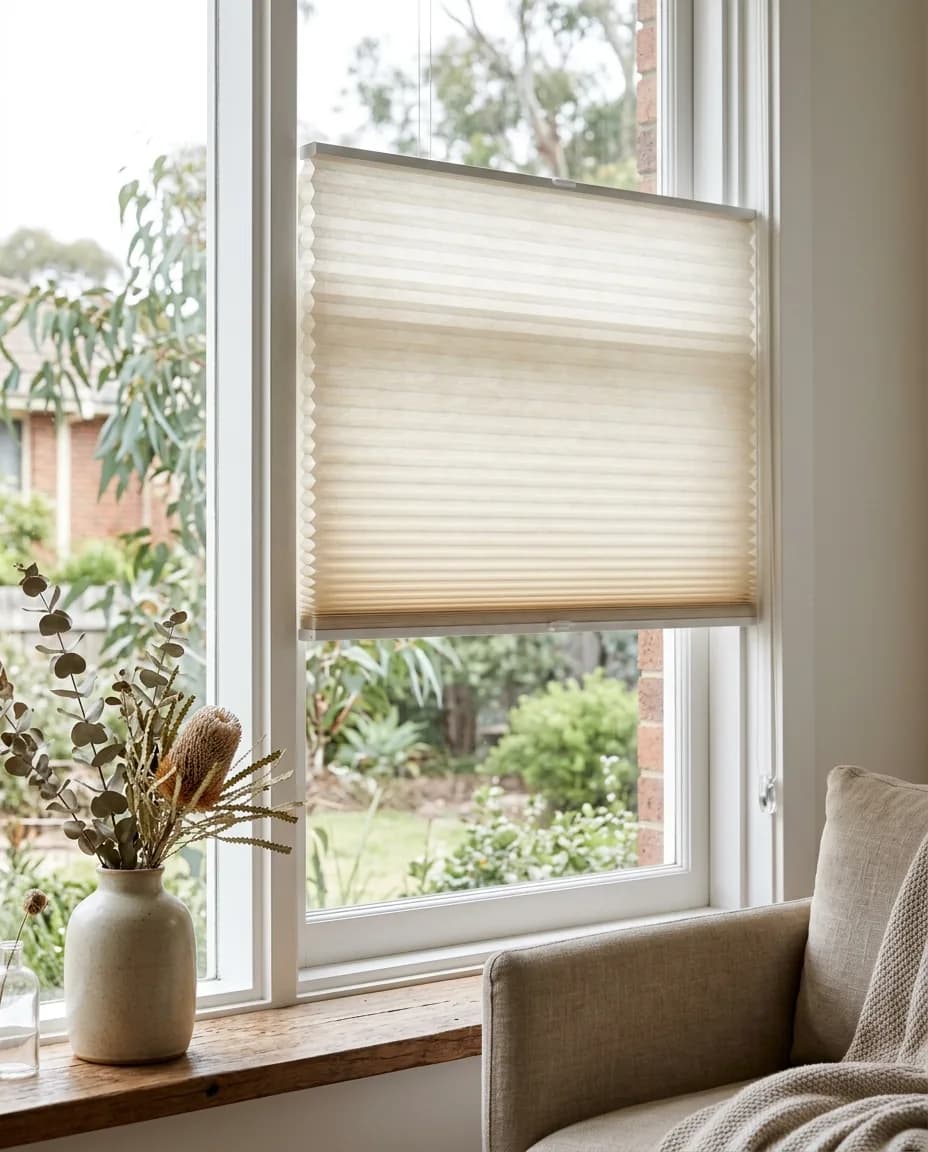
Honeycomb blinds for insulation & heat
Windows are where a lot of a room’s heat comes in on a summer afternoon and leaves on a winter night. The cells in a honeycomb blind trap a layer of air in front of the glass, which is why honeycomb is the blind people ask us about when a room is too hot or too cold.
- How it works
- Air trapped in the cells slows heat moving through the window
- Single cell
- One layer of cells
- Double cell
- Two layers — may add insulation, depending on the product
- Best for
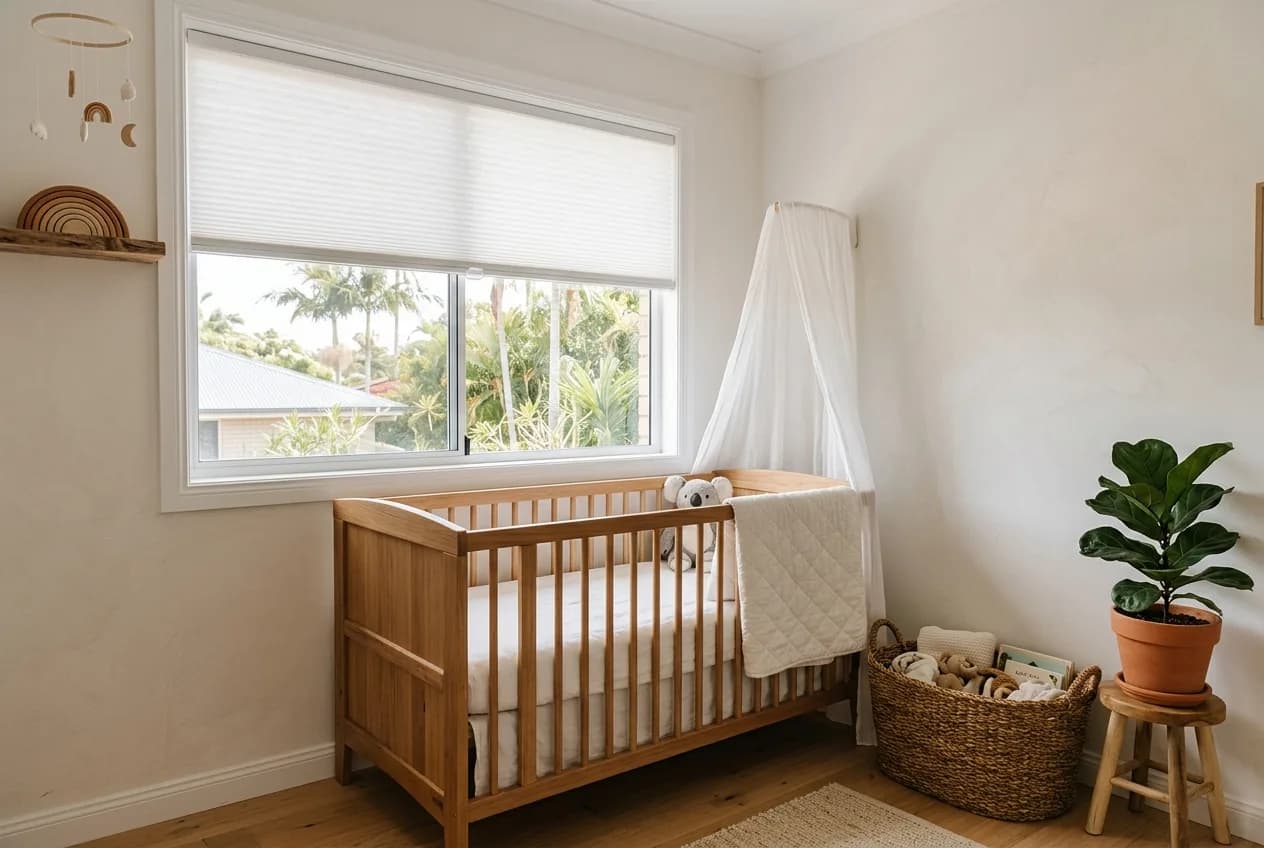
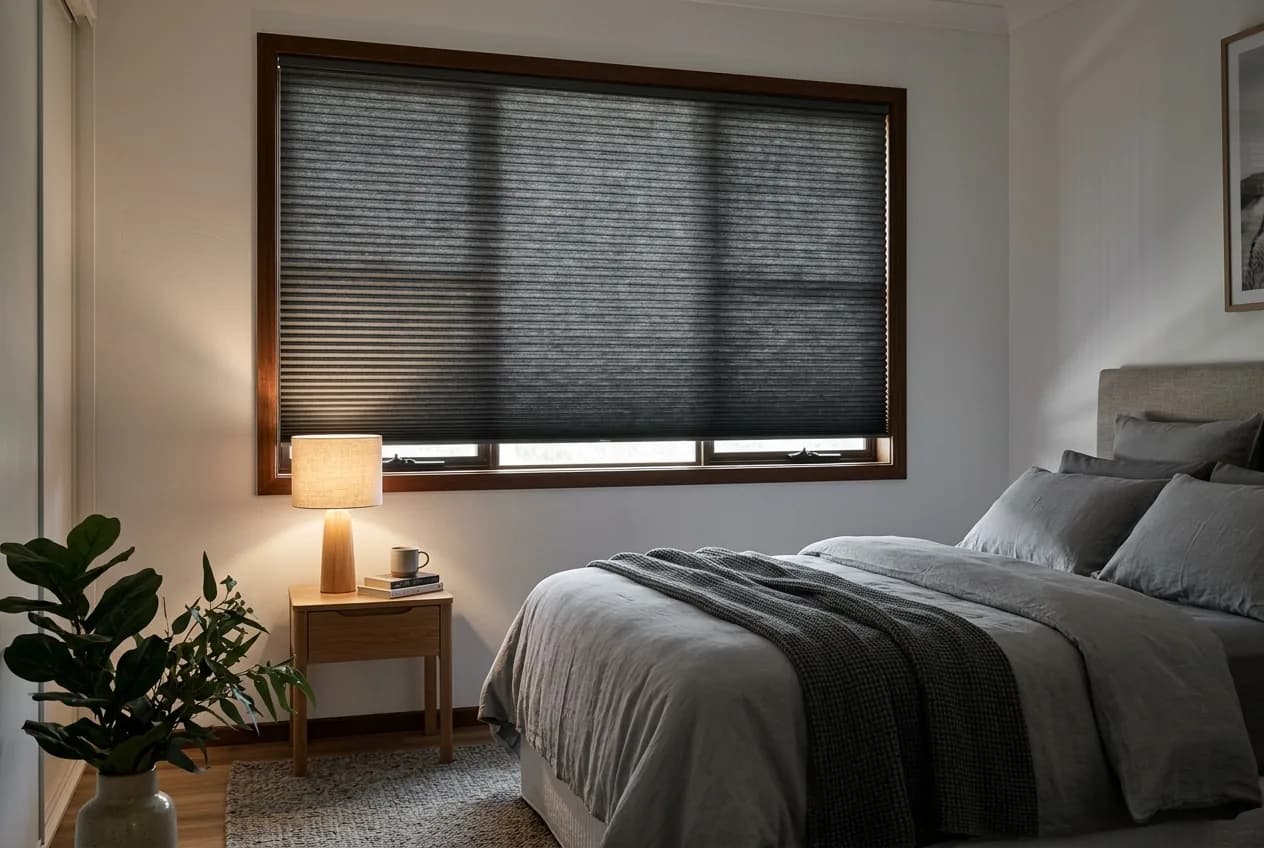
- West-facing rooms, bedrooms, rooms that are hard to heat or cool
- Fabrics
- Light-filtering or blockout, depending on the range
- Lead time
- Typically 3–12 weeks, depending on the product and supplier
We look at the whole window.
Which way it faces, how big it is and how it is used all change what a blind can do. We will give you a straight answer, not a number.
Or call the showroom on 07 3369 1183
How a honeycomb blind insulates
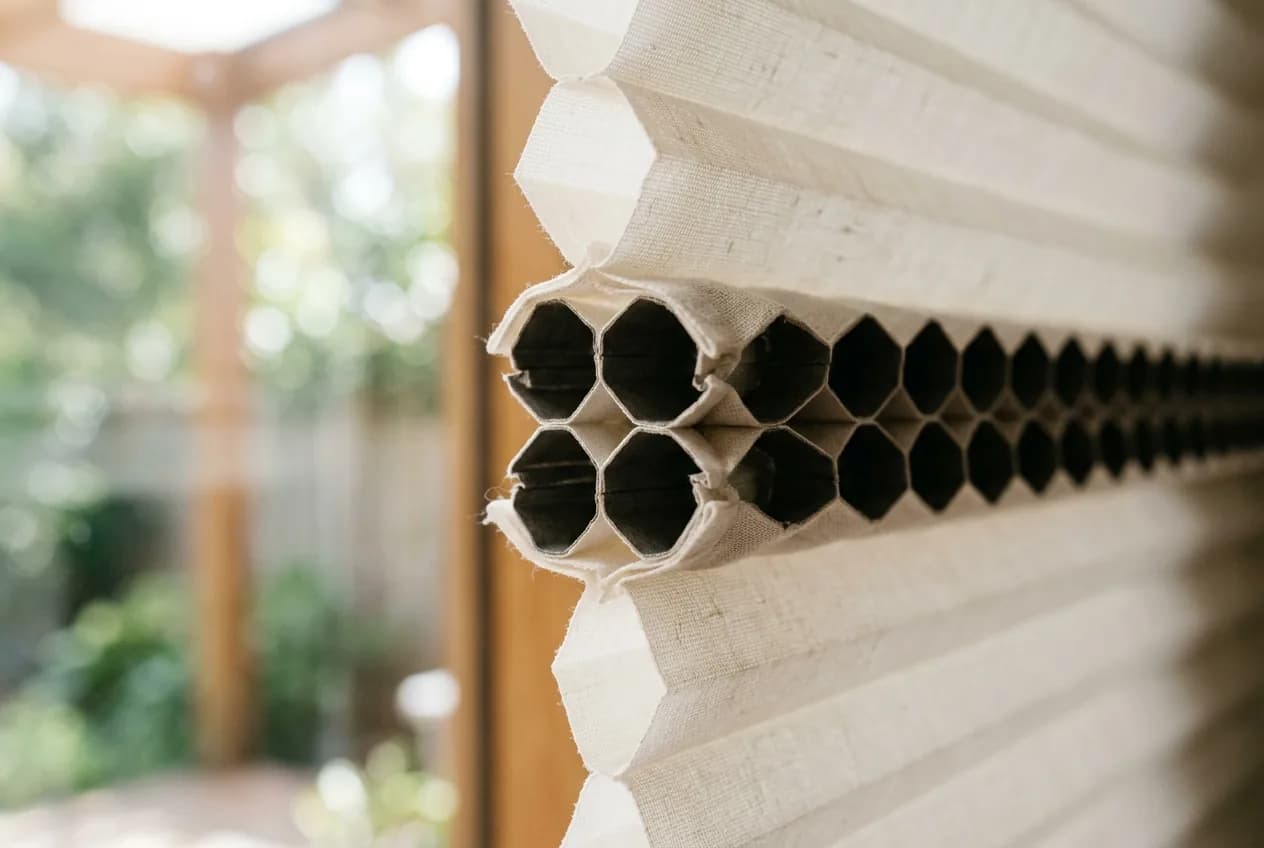
Look at a honeycomb blind side-on and you can see why it is called that: the fabric is folded into rows of hexagonal cells. Each cell holds a pocket of still air, and still air is a poor conductor of heat. With the blind down, that layer sits between the glass and the room.
In summer it helps slow the heat coming in through a sunny window; in winter it helps slow the warmth leaving through cold glass. The blind works best when it is down during the part of the day that matters — the afternoon on a west window, the evening in winter.
Single cell or double cell
Single-cell blinds have one row of cells. Double-cell blinds have two, one behind the other, which adds another layer of trapped air and may provide additional insulating performance, depending on the product.
Double-cell is not automatically the right choice for every window. We will talk through where the difference is worth it, and where a single cell does the job.
What to expect, honestly
A honeycomb blind is one of the more effective window coverings for heat and cold, but how much difference it makes in your house depends on the window, its glazing, which way it faces, the fit of the blind and how you use it. So we do not quote percentages or promise savings on your power bill.
What we can do is look at the rooms that bother you, explain what honeycomb will and will not change, and compare it with the other options — including shutters and blockout roller blinds — for those windows.
The fit matters
Air that moves around the edges of a blind carries heat with it, so a well-fitted blind that sits neatly in the window does better than one with wide gaps. Measuring and fitting is part of the job we do ourselves.
Free measure & quote
Samples at your place, every opening measured, an itemised price. No obligation.
Other honeycomb blinds
Other ways to use honeycomb

Common questions
Do honeycomb blinds really insulate?
Yes — the air trapped in the cells slows heat moving through the window. How much difference it makes depends on the window, the glazing, the fit and how you use the blind.
Is double cell better than single cell?
Double-cell adds a second layer of cells and may provide additional insulating performance, depending on the product. Whether it is worth it depends on the window.
How much will honeycomb blinds save on my power bill?
We do not put a number on it, because it depends on your house, windows and habits. We will tell you honestly where honeycomb should help most.
Are honeycomb blinds good for Brisbane summers?
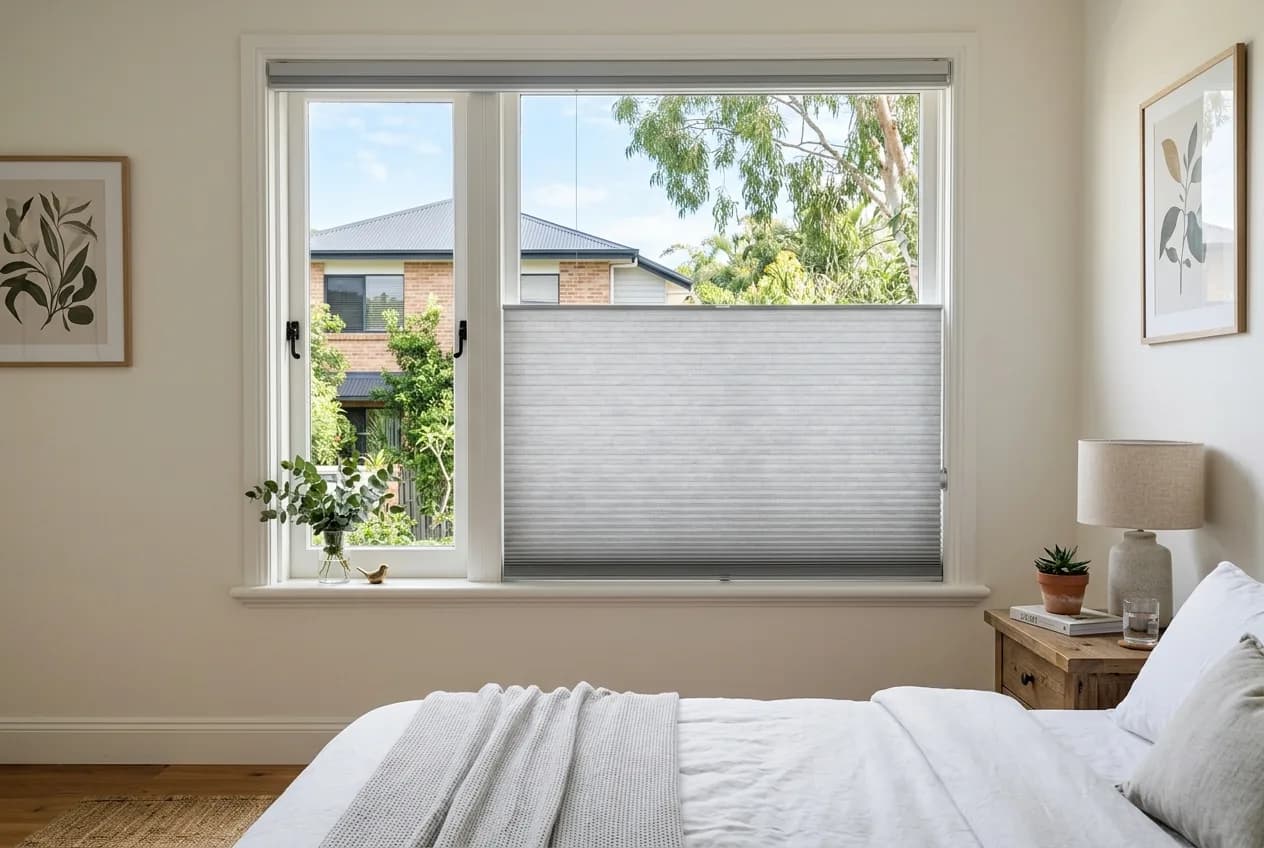
Lowered on sunny windows in the afternoon, they help slow the heat coming in. West-facing rooms are where people usually notice it most.
Ready when you are
Start with the room that is too hot or too cold.
We bring the samples, measure every opening and leave you with a clear, itemised price. No obligation.