
Buying guide · roller blinds
Front roll vs back roll: which way should a blind roll?
A roller blind can come off the tube on the window side or the room side. It sounds like a detail, and it decides how the blind looks, whether it clears your window handles and how close the fabric sits to the glass.
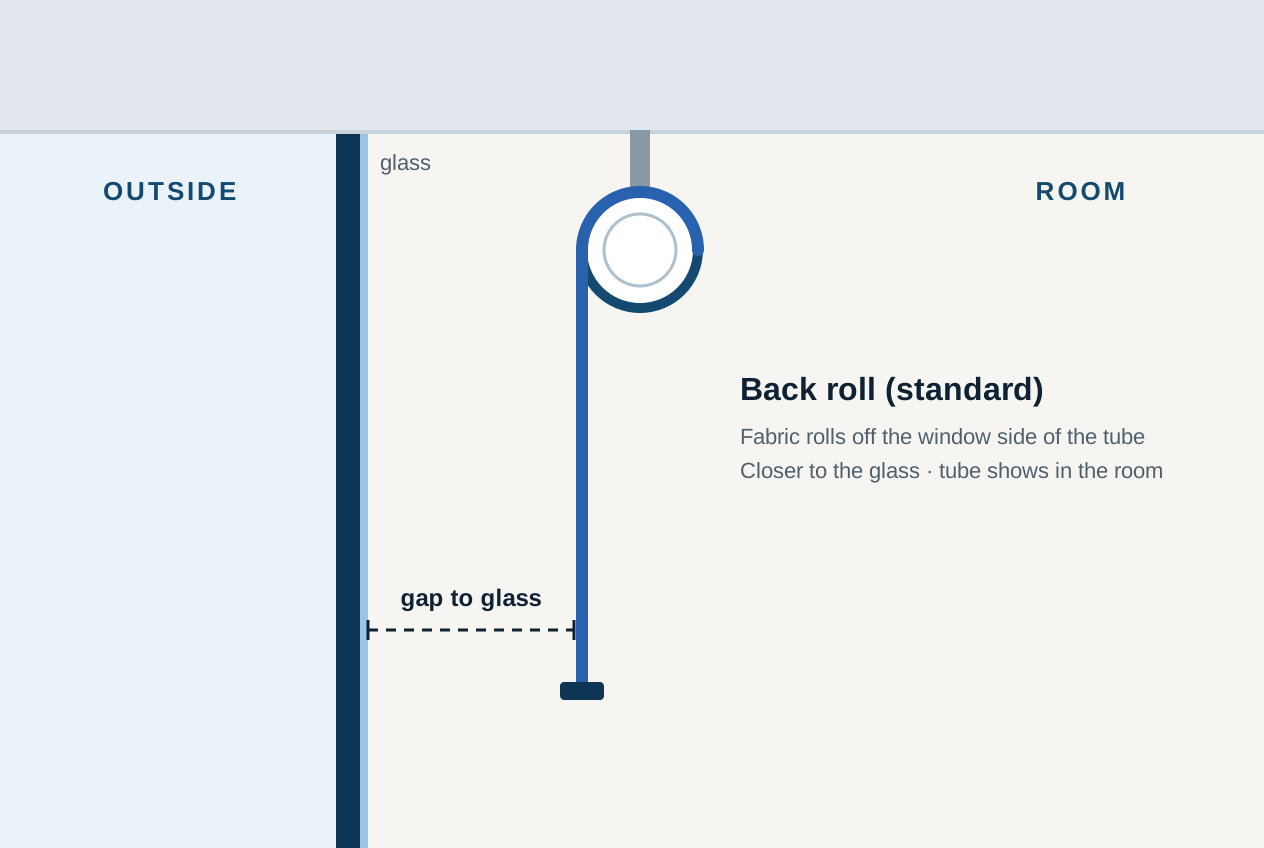
The standard way
Back roll
- Fabric
- Comes off the window side of the tube
- Gap to glass
- Smaller — fabric sits closer to the window
- Tube
- Rolled fabric is visible from the room
- Clearance
- Can catch on winders and handles in the reveal
- Suits
- Most windows with a clear, flat reveal
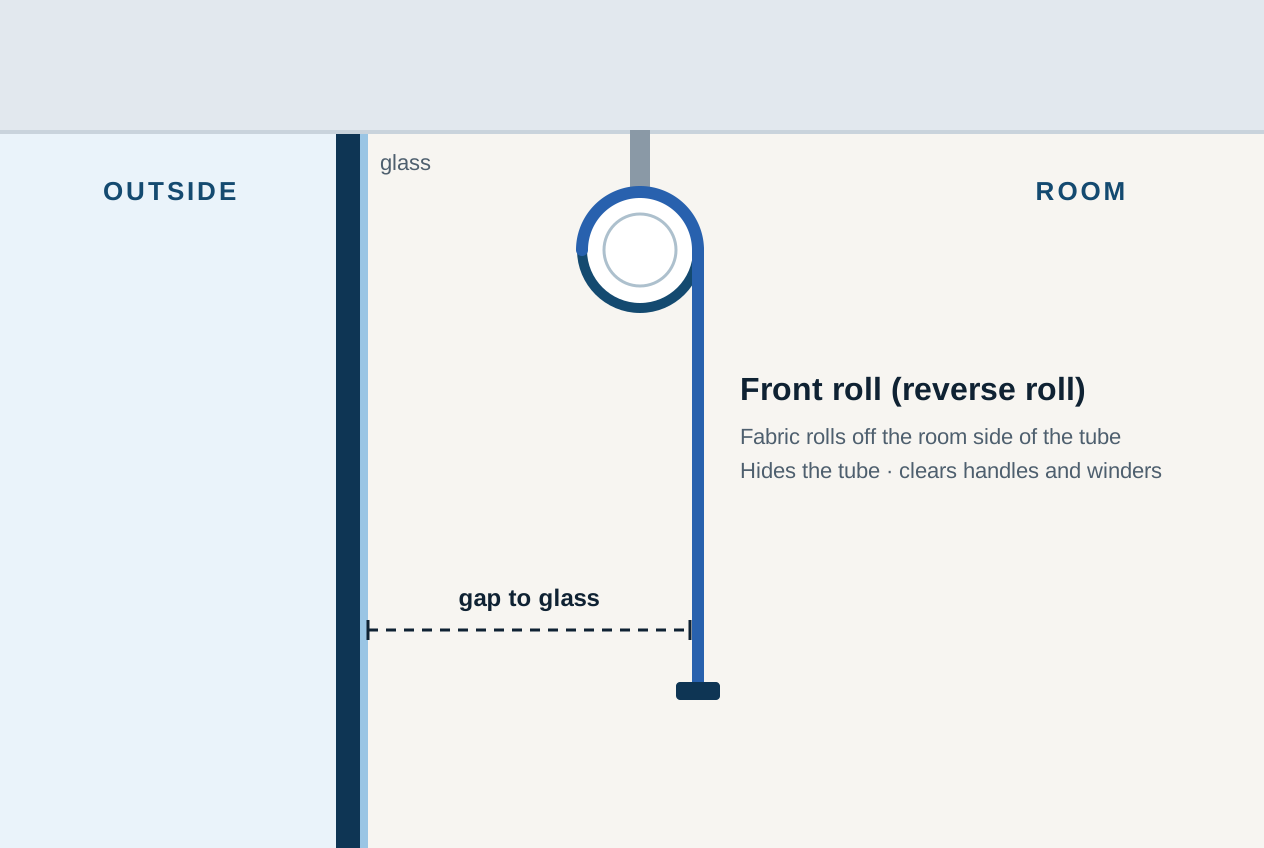
Also called reverse roll
Front roll
- Fabric
- Rolls over the top and comes off the room side
- Gap to glass
- Larger — fabric hangs further into the room
- Tube
- Fabric covers the roll for a neater look
- Clearance
- Clears winders, handles and deep sills
- Suits
- Awning and casement windows, shallow reveals
Window by window
What we'd fit where
| Window | Our pick | |
|---|---|---|
| Awning or casement window with winders | Front roll | Fabric clears the handles |
| Sliding window, flat reveal | Back roll | Sits close to the glass, nothing to clear |
| Tube on show from the bed or couch | Front roll | The fabric hides the roll |
| Dual blinds | Planned together | The two rollers are set up to suit each other |
We decide the roll direction at the measure.
Free measure and quote across Brisbane Northside.
What the difference is
Every roller blind is a length of fabric wound around a tube at the top of the window. On a back roll blind — the standard setup — the fabric unwinds from the back of the tube, the side nearest the glass. On a front roll, or reverse roll, blind it goes up and over the tube and unwinds from the front, on the room side.
The fabric is the same either way. What changes is where it hangs, and what you see from inside.
Clearing handles and winders
This is usually what decides it. Awning and casement windows have winders and handles sitting in the reveal, and a back roll blind that hangs close to the glass can catch on them. A front roll moves the fabric out into the room, far enough to drop cleanly past the hardware.
Deep sills and anything else sticking out into the reveal get the same treatment.
How it looks
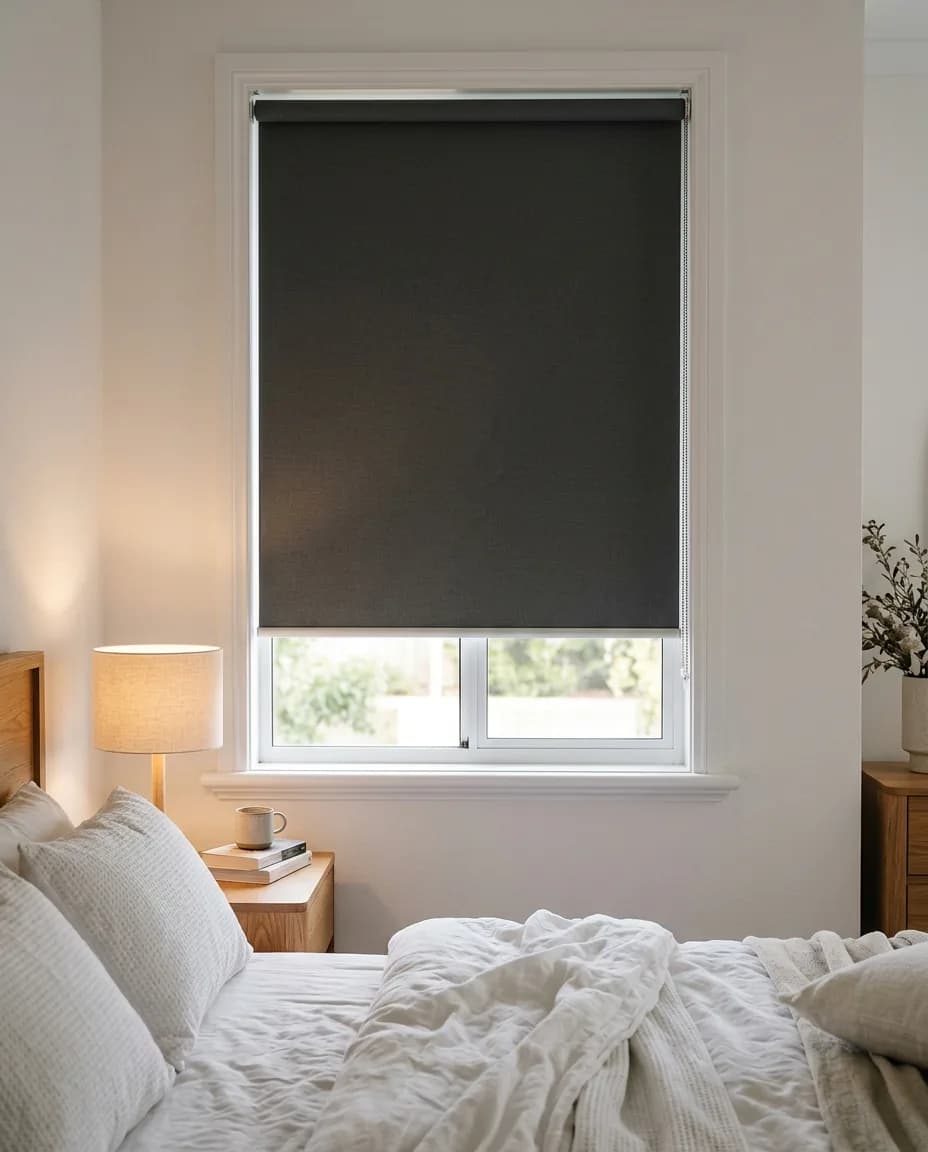
With a back roll blind, the roll of fabric on the tube is visible from the room. With a front roll, the fabric wraps over the tube and covers it, which many people find neater — especially in a bedroom where you look straight up at the window.
The gap to the glass
A back roll blind sits closer to the window, and a front roll sits further into the room. How that changes the light around the edges, or the air trapped between blind and glass, depends on the window and how the blind is mounted, so we do not make general claims about it. We will look at your window and explain what to expect.
Free measure & quote
Samples of both at your place, every opening measured, an itemised price. No obligation.
Common questions
What is a reverse roll roller blind?
Another name for a front roll blind: the fabric rolls over the top of the tube and comes down on the room side, away from the glass.
Which is better, front roll or back roll?
Neither in general. Back roll is the standard and sits close to the glass. Front roll clears winders and handles and hides the roll of fabric. The window usually decides.
Can I change the roll direction later?
Sometimes, depending on the blind and brackets. It is much easier to get right at the measure, which is why we decide it then.
Do I need to choose before the measure?
No. We look at each window, check for handles and winders, and recommend the roll direction with the reason.
Ready when you are
The right roll for every window.
We bring the samples, measure every opening and leave you with a clear, itemised price. No obligation.