Buying guide · blinds
Honeycomb vs roller blinds: which suits your window?
Both are clean, modern blinds and we fit plenty of each. The difference is what they are made of: a roller blind is a single sheet of fabric, and a honeycomb is a stack of air-filled cells. That changes how they insulate, how they open and how they look.
Simple and versatile
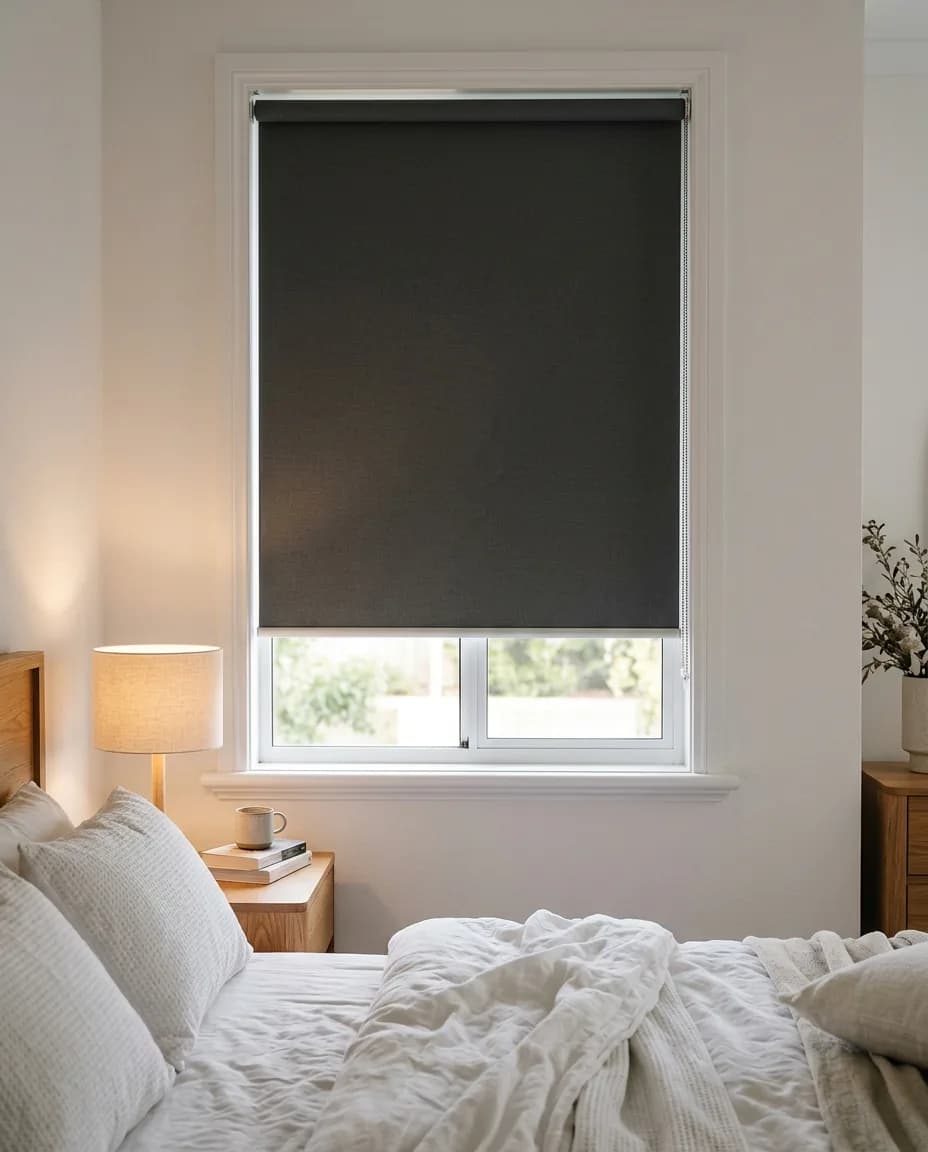
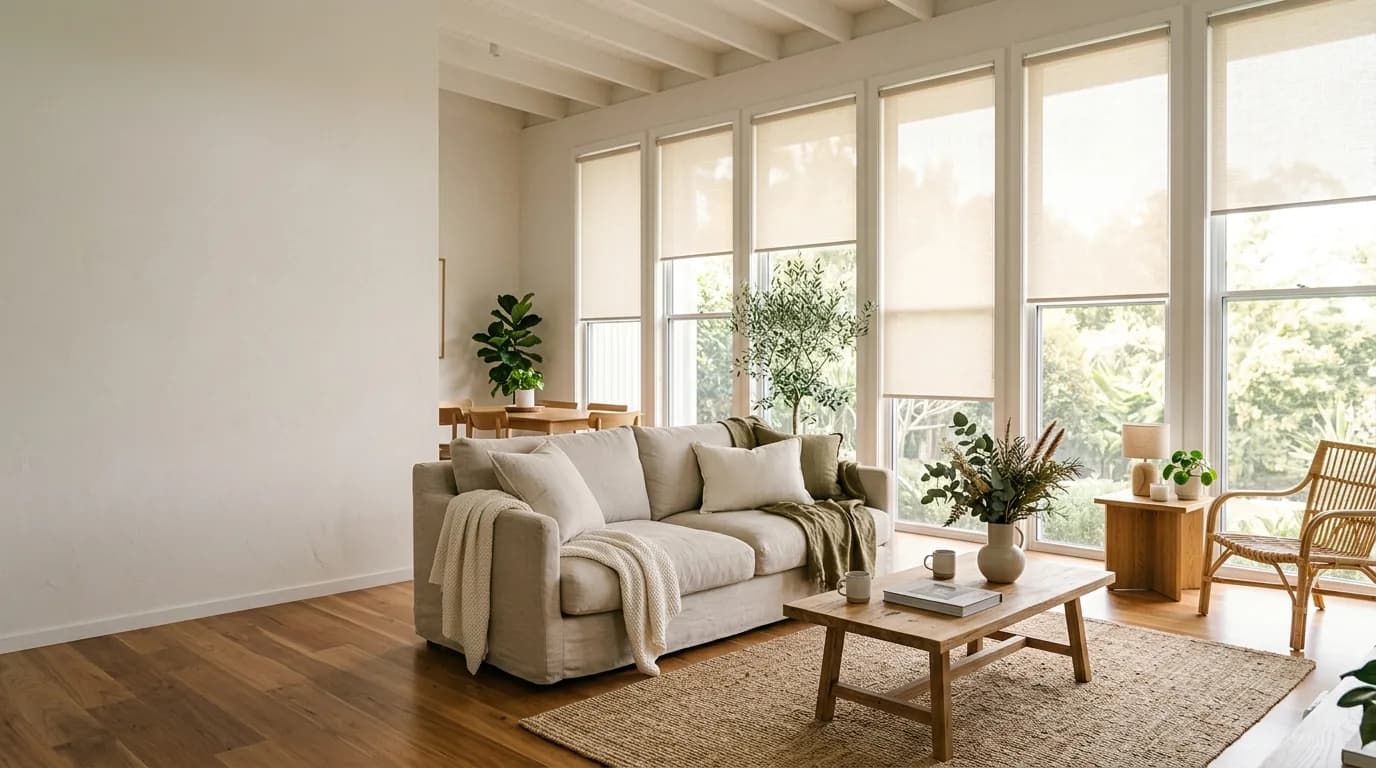
Roller blinds
- Build
- A single sheet of fabric on a tube
- Insulation
- Some, from the fabric itself
- Opens
- From the bottom; dual blinds give two fabrics
- Fabrics
- Widest range, including sunscreen and printed
- Budget
- Usually the lower-cost option
Insulating and flexible
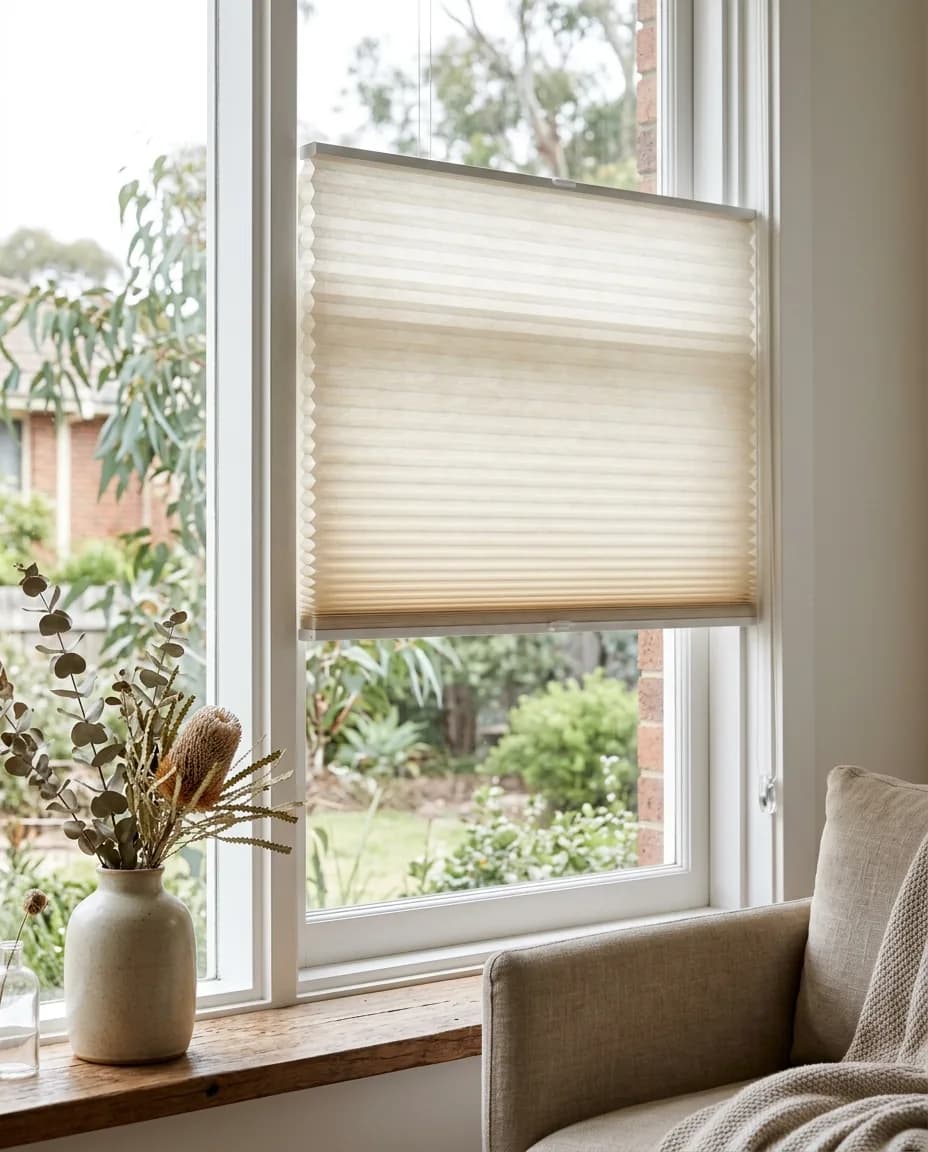
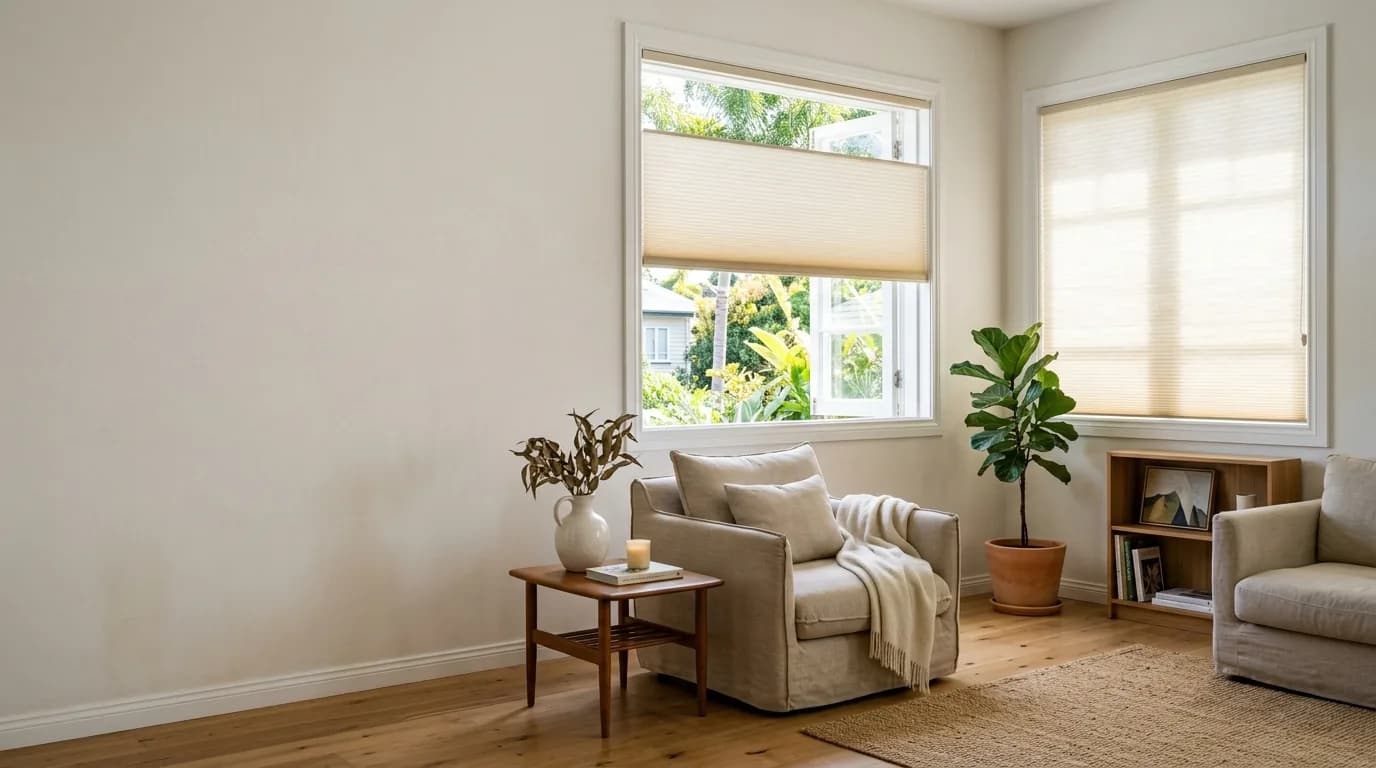
Honeycomb blinds
- Build
- Rows of air-filled cells, pleated
- Insulation
- Better — the cells trap air in front of the glass
- Opens
- From the bottom, or top-down/bottom-up on suitable products
- Fabrics
- Light-filtering or blockout, depending on the range
- Budget
- Usually a step up from a roller blind
Room by room
What we'd put where
| Situation | Our pick | |
|---|---|---|
| Hot west-facing bedroom | Honeycomb | Insulating cells, blockout available |
| Window facing the neighbours | Honeycomb | Top-down/bottom-up keeps privacy with light |
| Living room with glare on the TV | Roller | Sunscreen fabric keeps the view |
| Lots of windows, tight budget | Roller | Simpler and usually lower cost |
| Kids’ room with a feature wall | Roller | Printed fabrics are a roller-blind option |
Samples of both, at your windows.
Free measure and quote across Brisbane Northside.
Insulation is the big difference
A roller blind is one layer of fabric, so it does some good against heat and cold. A honeycomb blind is built from cells that each hold a pocket of still air, and that layer of trapped air is what makes it the better insulator of the two. Double-cell honeycomb adds a second layer on some products.
If a room is uncomfortable because of the window — a west-facing bedroom in summer, a living room that loses its warmth on winter nights — honeycomb is usually the better choice. We do not put numbers on it, because the window, the glazing and the fit all change the result.
How they open
Roller blinds go up and down. A dual roller blind gives you two fabrics — say a light-filtering one for the day and a blockout for night.
Honeycomb blinds go up and down too, but on suitable products they can also open from the top. That top-down/bottom-up option lets light in over the top while the lower part of the window stays covered, which a roller blind cannot do.
How they look
A roller blind rolls up almost out of sight and suits clean, minimal rooms. Honeycomb has a soft pleated texture that adds a little warmth to the window, and stacks into a slim bundle at the top when raised. Roller blinds come in the widest range of fabrics, including sunscreen mesh and custom prints; honeycomb comes in light-filtering and blockout fabrics depending on the range.
Using both in one house
Plenty of homes mix them: honeycomb in the bedrooms and the rooms that get too hot, roller blinds in living areas and kitchens where glare and budget matter more. We can plan the whole house at one measure and quote each room with whichever suits it.
Free measure & quote
Samples of both at your place, every opening measured, an itemised price. No obligation.
Common questions
Are honeycomb blinds better than roller blinds?
For insulation and privacy-with-light, usually yes. Roller blinds offer more fabrics, including sunscreen and printed, and are usually the lower-cost option.
Are honeycomb blinds more expensive than roller blinds?
Usually a step up. How much depends on the size, fabric and options, so we quote both for your windows if you would like to compare.
Which is better for a hot bedroom?
Honeycomb, usually in blockout — the cells help with heat and the fabric darkens the room.
Can both be motorised?
Motorisation is available across many roller and honeycomb ranges. We confirm compatibility for the products we quote.
Ready when you are
The right blind for each room, in one quote.
We bring the samples, measure every opening and leave you with a clear, itemised price. No obligation.