
Buying guide
Z-frame, L-frame, hinged, sliding — what it all means
Two decisions sit behind every shutter: the frame it is mounted in, and how the panels move. Here is what each option does, in plain terms, and which windows it tends to suit.
- Z-frame
- Sits over the edge of the opening, like a picture frame
- L-frame
- Sits in or on the reveal for a cleaner, flatter line
- Hinged
- Panels swing open like a door — the classic shutter
- Sliding
- Panels run on a track — for doors and long spans
- Bi-fold
- Panels fold back in pairs to clear the opening
- Fixed
- Panels stay put; the louvres still tilt
You do not need to know any of this.
We work it out at the measure and explain why. This page is here if you like to know what you are agreeing to.
Or call the showroom on 07 3369 1183
The frame: Z-frame or L-frame
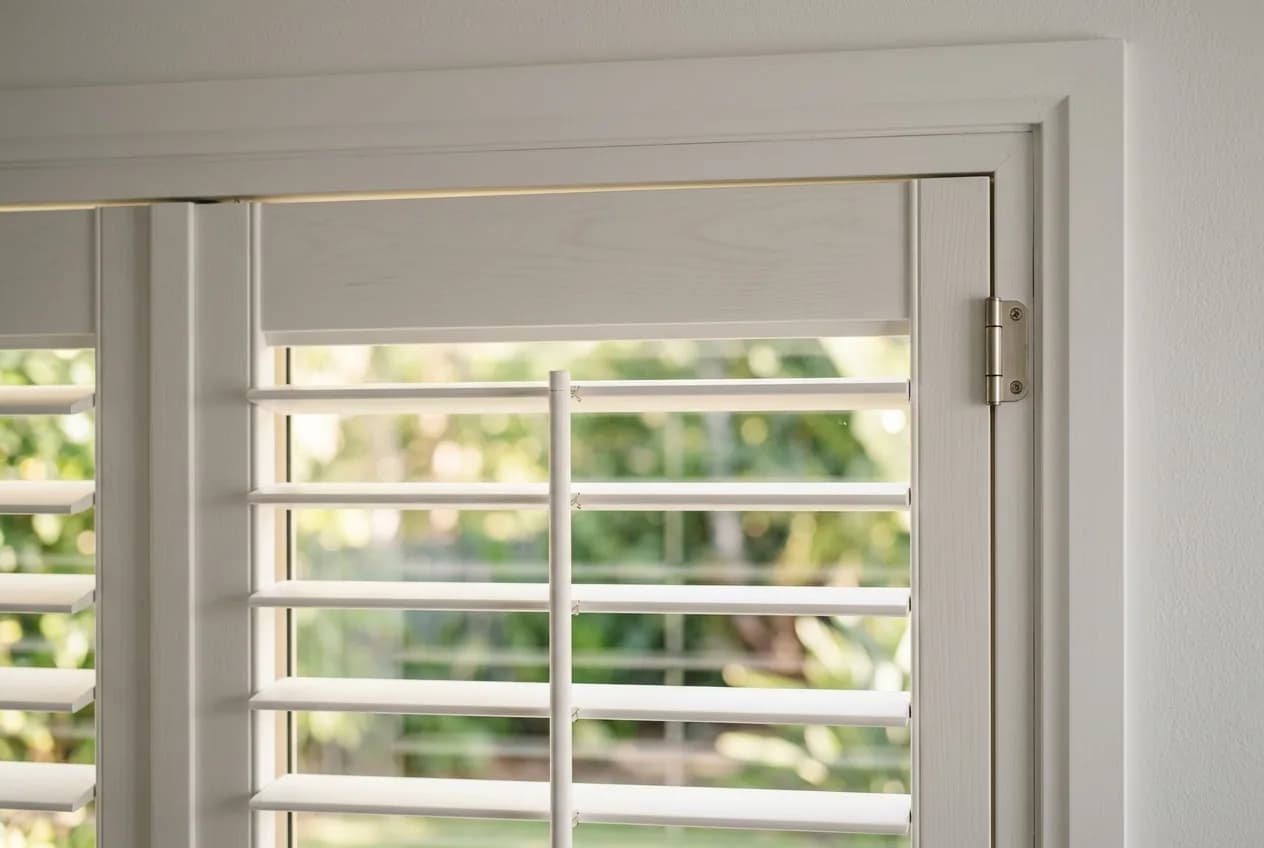
The frame is what the shutter panels hang in, and it is fixed around the window. The two you will hear about most are the Z-frame and the L-frame, named for the shape of the frame in cross-section.
A Z-frame steps out over the edge of the window opening, so from the room it looks like a finished picture frame around the shutter. It covers small irregularities in the reveal, can give the louvres room to tilt clear of the window hardware, and is a common choice on whole-home jobs.
An L-frame is simpler and slimmer. It sits inside or on the face of the reveal for a flatter, more minimal look, and suits windows where the reveal is deep and square or where you want the shutter to recede into the wall.
Hinged panels
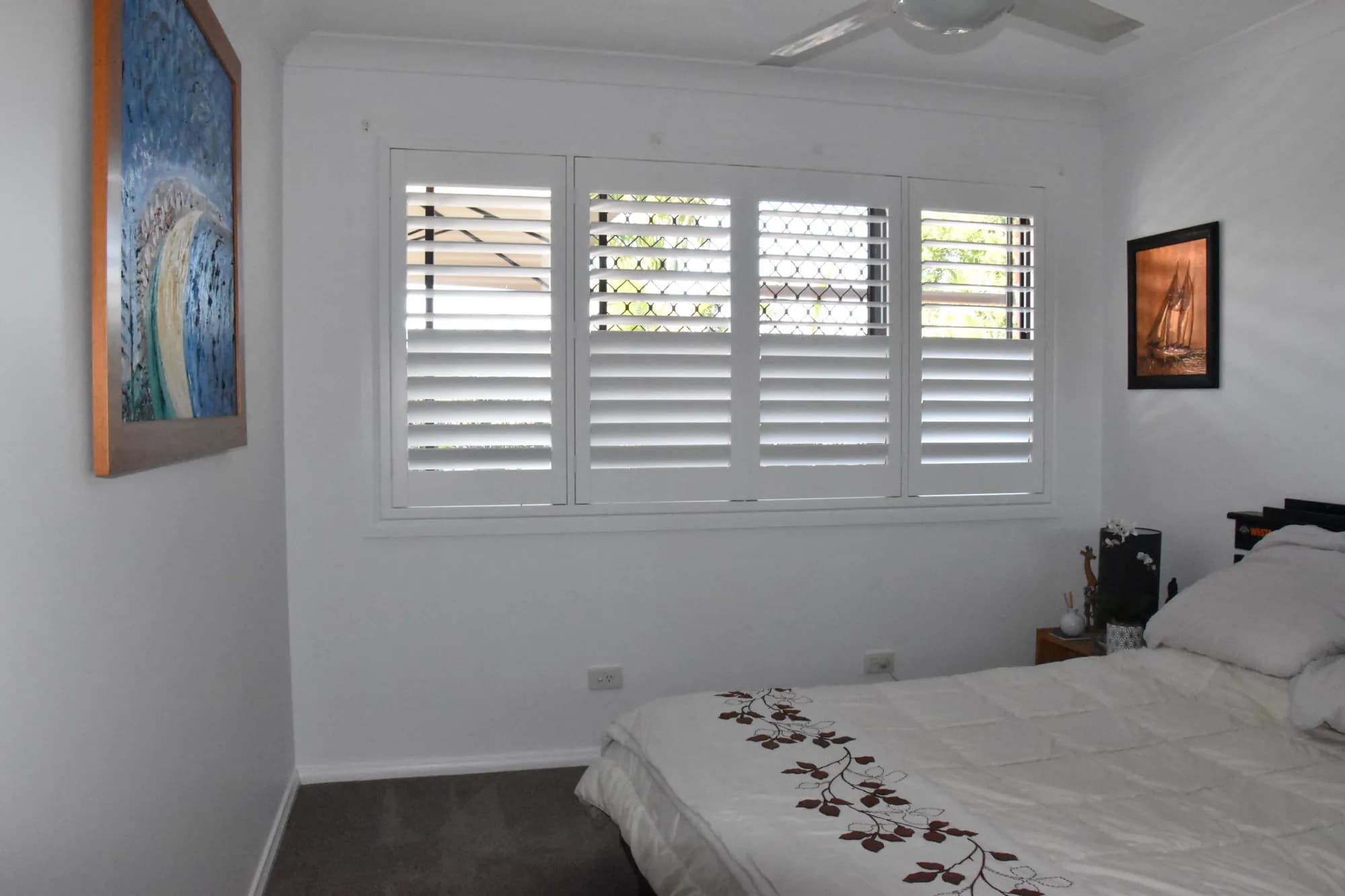
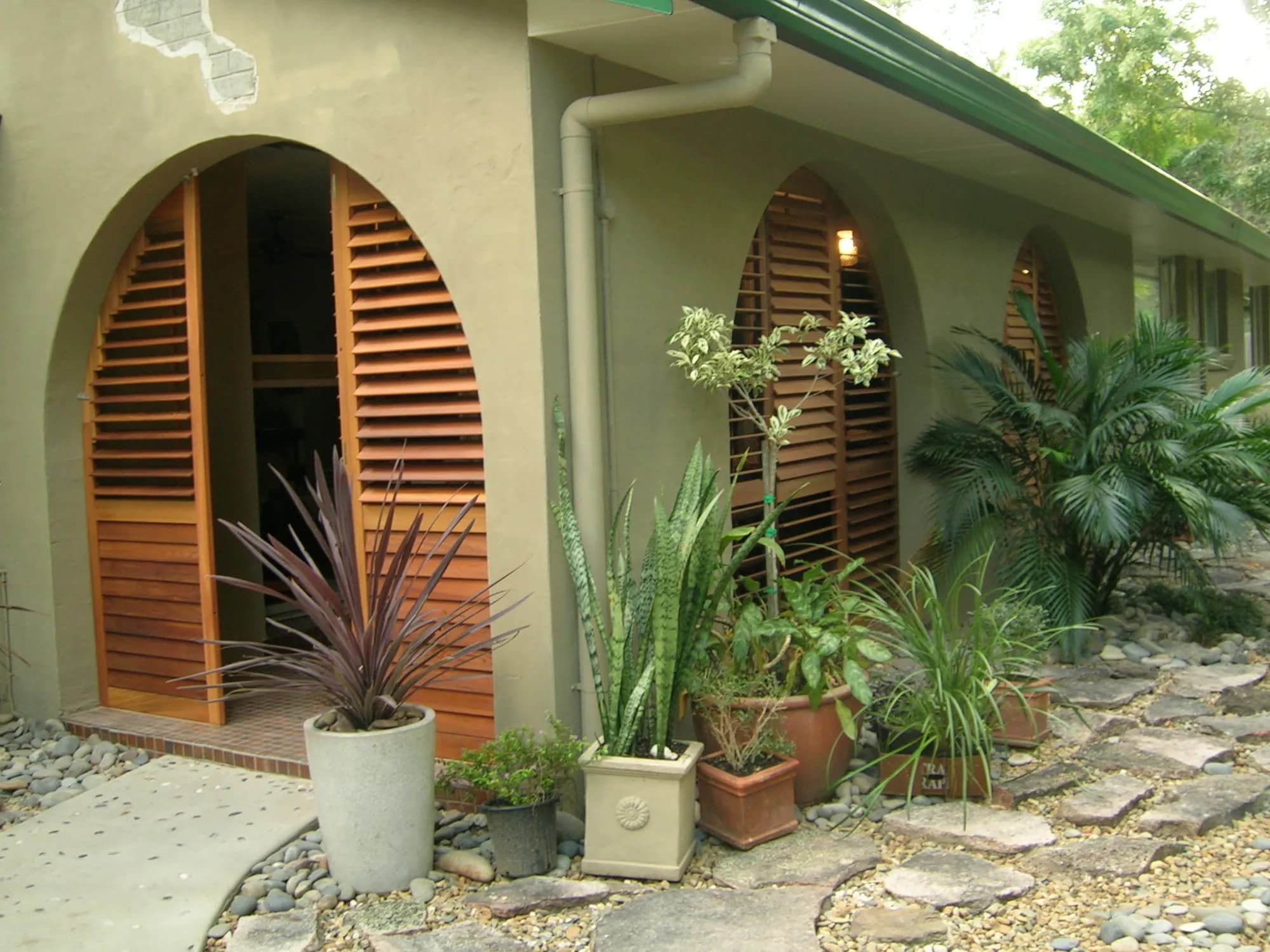
The classic shutter: panels on hinges that swing open into the room, singly or in pairs. Most ordinary windows get hinged panels, because they open fully to clean the glass or let the breeze in and they suit almost any size. The only thing to check is that there is room for the panel to swing — a bedhead, a tap or a bench can get in the way.
Sliding and bi-fold panels
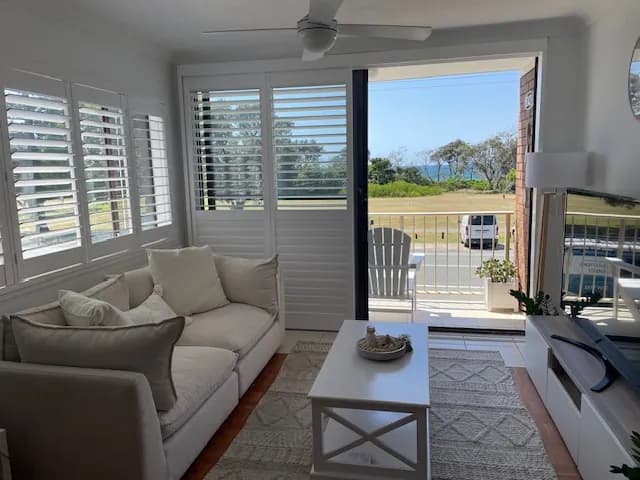
Sliding panels run on a track and slide past each other, so they never swing into the room. They are the usual answer for sliding doors and long runs of glass. Bi-fold panels are hinged in pairs and fold back against each other, clearing more of the opening than a sliding stack does but needing wall space to fold into.
Fixed panels
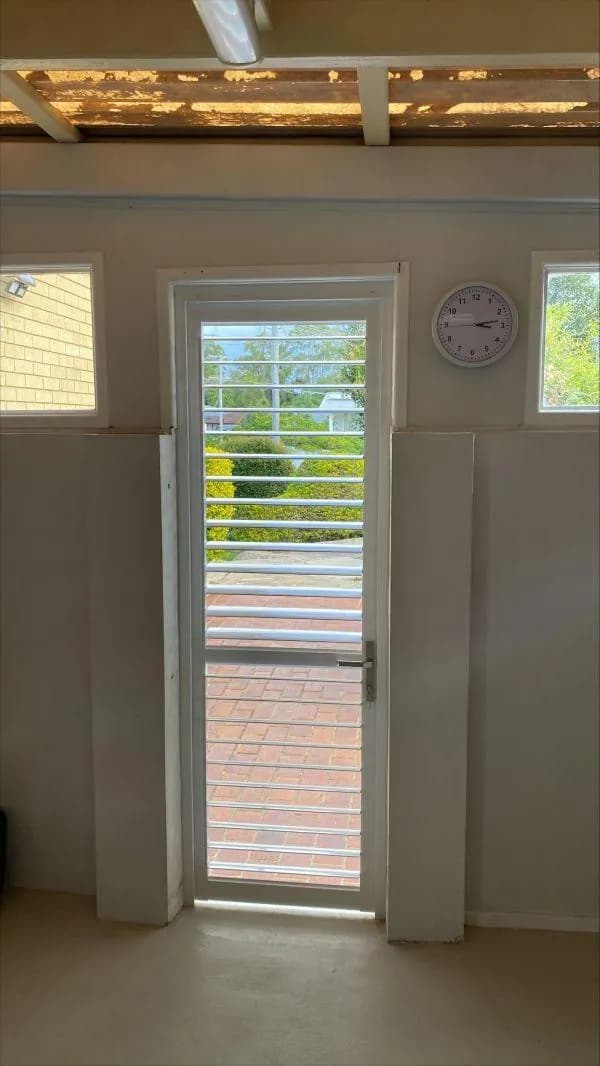
A fixed panel does not open, but its louvres still tilt, so you keep the light and privacy control. Fixed panels suit windows you never open, high windows, and the parts of a long run that sit behind furniture. They are also a neat way to deal with a window where there is no room for a panel to swing.
Frames and light gaps
People often ask which frame lets the least light in around the edges. Frame choice and fitting style do reduce light gaps, and light seals can help further on some products — but no plantation shutter makes a room completely dark. If a dark bedroom is the goal, we will talk through what shutters can realistically do and what else might suit.
Free measure & quote
Samples at your place, every opening measured, an itemised price. No obligation.
Also worth a look
Where these choices matter most
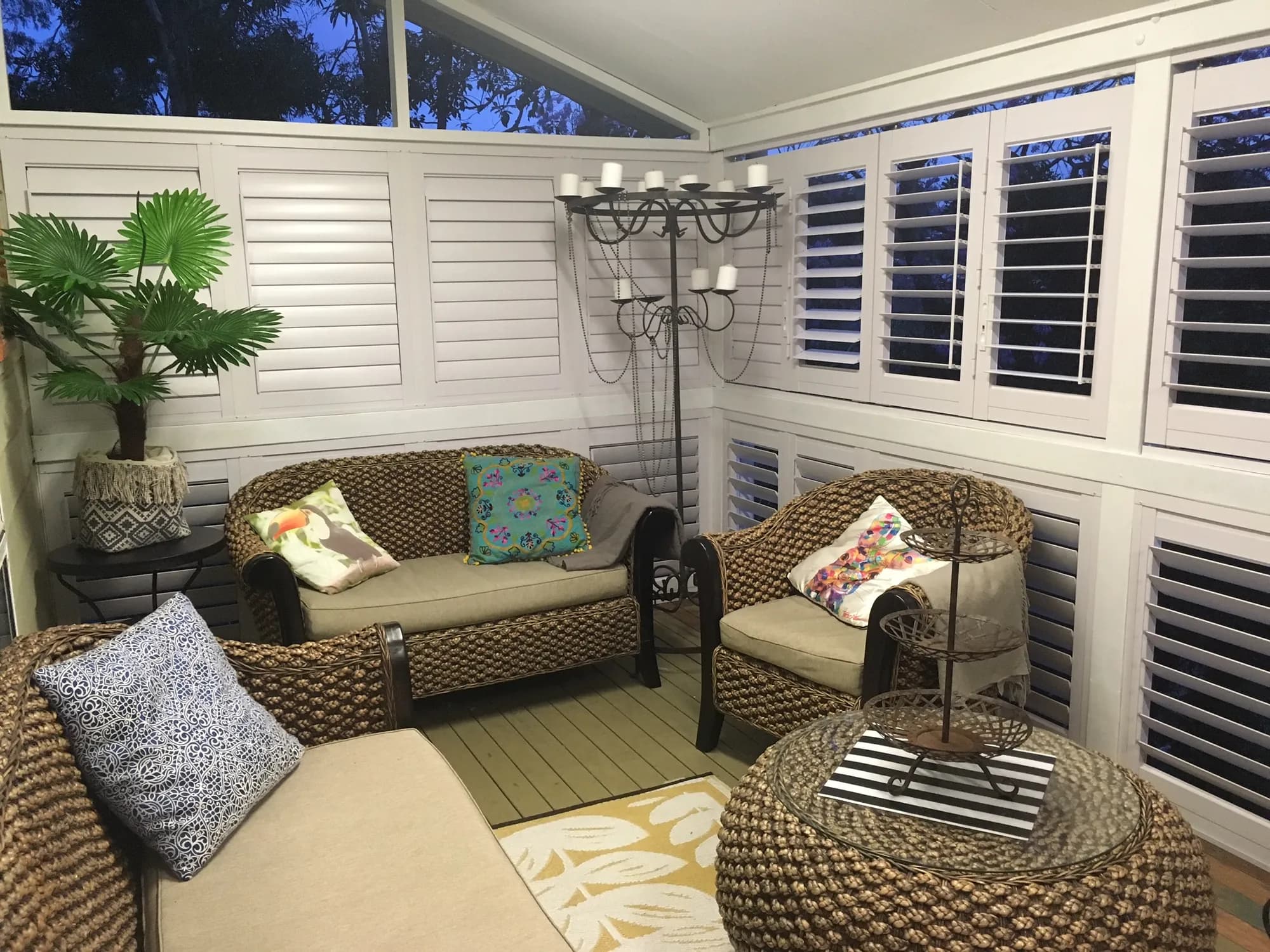
Common questions
What is the difference between a Z-frame and an L-frame?
A Z-frame steps out over the edge of the opening and looks like a picture frame around the shutter. An L-frame is slimmer and sits in or on the reveal for a flatter look. We recommend one at the measure based on the window.
Which frame is best?
Neither in general — it depends on the window. Z-frames suit most windows and give a finished, framed look; L-frames suit deep, square reveals and a minimal look.
Can I mix hinged and fixed panels on one window?
Yes. A long window might have fixed panels at the ends and hinged panels in the middle, for example. The layout is planned around how you use the room.
Do I need to choose all this before the measure?
No. We bring samples, look at each window and recommend the frame and configuration, with the reasons. You make the call.
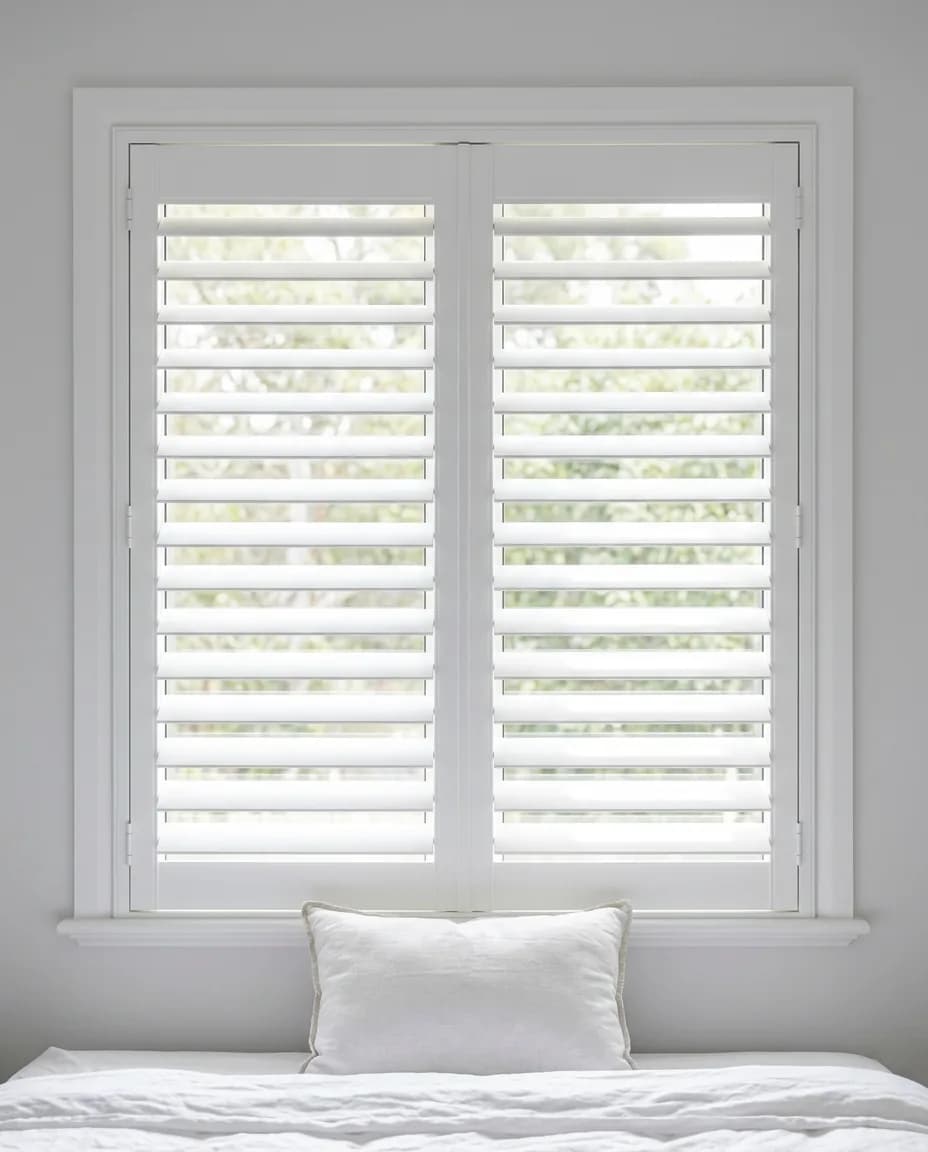
Ready when you are
Let us do the working out.
We bring the samples, measure every opening and leave you with a clear, itemised price. No obligation.