
Buying guide · fabrics
Blockout, light-filtering or room darkening: what’s the difference?
These words get used as if they mean the same thing, and they don’t. Here is what each one actually describes, what it looks like in a room, and which to choose where.
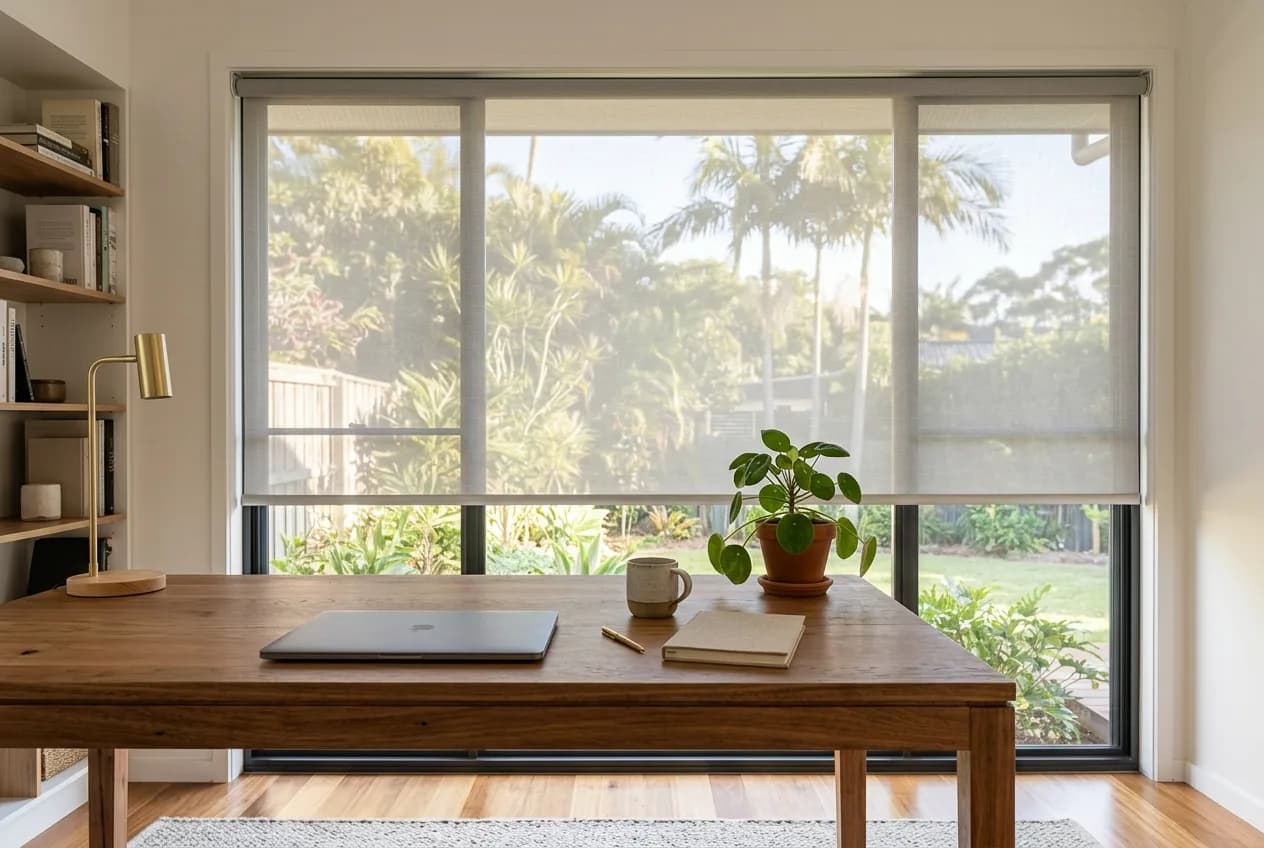
Light through, softened
Light-filtering
- Light
- Diffused light comes through the fabric
- Day privacy
- Yes — outside is brighter than in
- Night privacy
- No, with lights on inside
- View
- Soft shapes; sunscreen mesh keeps a view
- Also called
- Translucent, sheer, sunscreen, semi-opaque
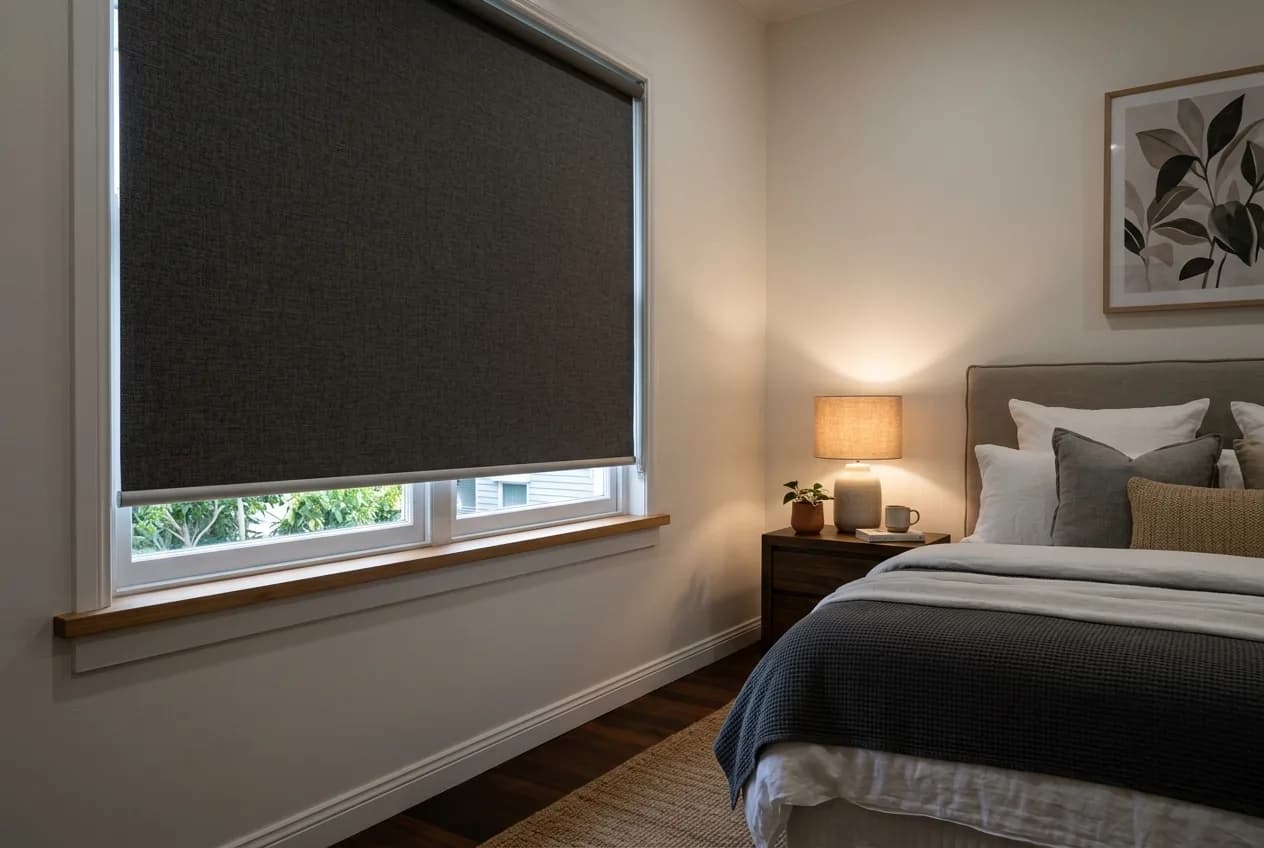
Light stopped at the fabric
Blockout
- Light
- Stops light through the fabric; edges can still show some
- Day privacy
- Yes
- Night privacy
- Yes
- View
- None while it is down
- Also called
- Blackout, opaque
Room by room
What we'd put where
| Room | Our pick | |
|---|---|---|
| Main bedroom | Dual | Soft light by day, dark and private at night |
| Nursery or shift worker | Blockout | The darkest roller blind |
| Living room | Light-filtering | Glare off, daylight kept |
| Home office, west-facing | Sunscreen | Cuts screen glare, keeps the view |
| Street-facing room used at night | Dual | Light-filtering alone shows in at night |
See both fabrics against your own window.
Free measure and quote across Brisbane Northside.
Blockout (or blackout)
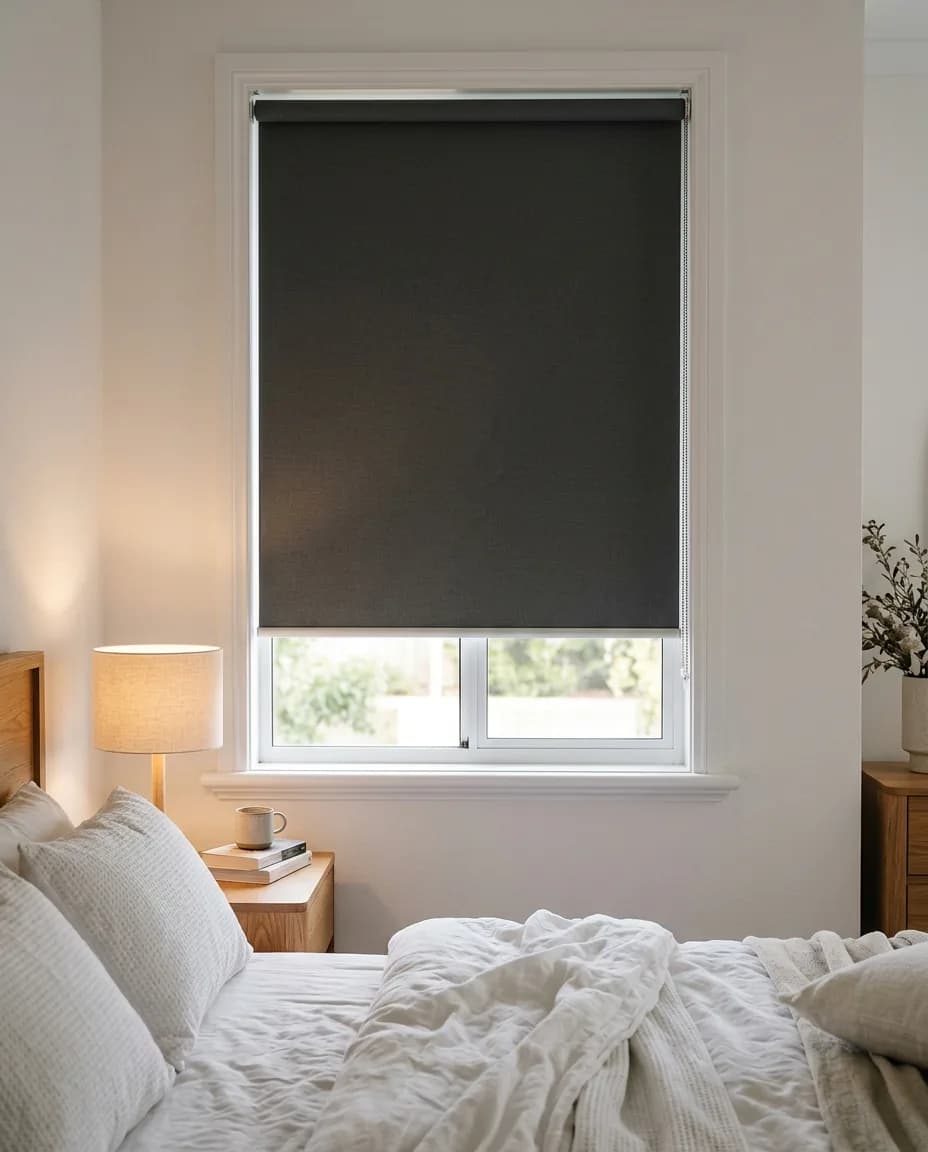
Blockout describes a fabric that stops light passing through it. Blackout means the same thing — it is the American word. Opaque is used the same way. It is a property of the fabric, and it makes a blockout blind the darkest roller blind you can have.
Room darkening
Room darkening describes the result in the room rather than the fabric, and that depends on more than the blind. A blockout fabric that is fitted with gaps down the sides will leave a room less dark than you might expect; the same fabric fitted to overlap the opening gets it darker. When someone promises a "room darkening" blind, ask how dark, and how it will be fitted.
Light-filtering, translucent and sheer
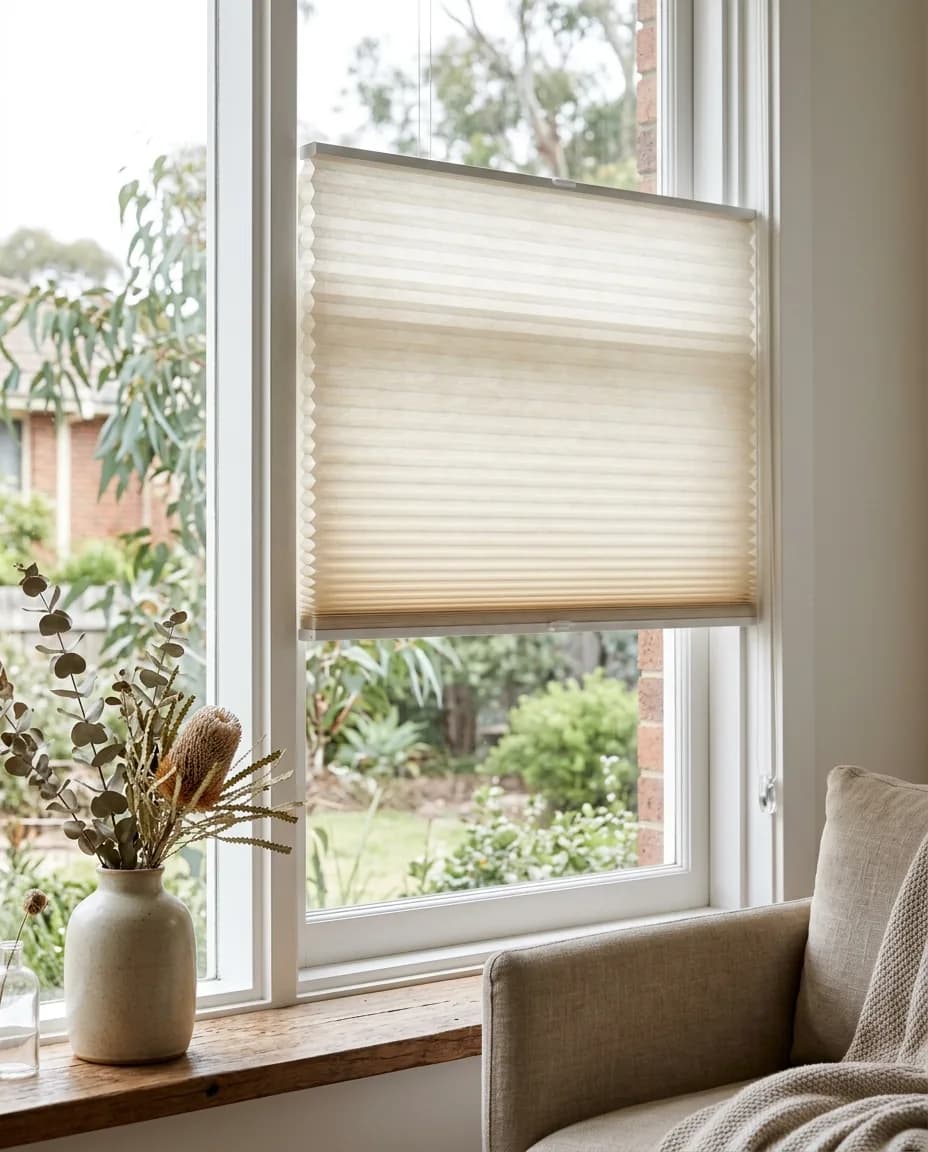
These fabrics let light through and diffuse it, so a room glows instead of glaring. Translucent and sheer are used for the same family; semi-opaque sits between them and blockout, letting less light through. They give privacy during the day, because it is brighter outside than in, but not at night with the lights on.
Sunscreen fabrics are a fine mesh in the same family. They cut sun and glare while keeping a view out through the weave.
Choosing between them
Start with what the room is for. Rooms you sleep in, especially during the day, want blockout. Rooms you live in during the day want light-filtering or sunscreen. Rooms that need both — most main bedrooms, and living rooms that face the street — suit a dual blind with one of each.
Fabric names vary between suppliers, so we bring samples and hold them up at the window. Seeing how much light comes through in your own room settles it faster than any description.
Free measure & quote
Samples of both at your place, every opening measured, an itemised price. No obligation.
Common questions
What is the difference between blockout and blackout blinds?
There is none. Blockout is the usual Australian term; blackout is the American one.
Is room darkening the same as blockout?
Not quite. Blockout describes the fabric. Room darkening describes how dark the room gets, which also depends on how the blind is fitted.
Do light-filtering blinds give privacy at night?
No. With the lights on inside, people can see in. For night-time privacy, use blockout or pair the two on a dual blind.
Will a blockout blind make a room completely dark?
It is the darkest roller blind option, but some light can come around the edges depending on the window and how the blind is fitted.
Ready when you are
The right fabric for how you use each room.
We bring the samples, measure every opening and leave you with a clear, itemised price. No obligation.